


The Complete Beginner’s Guide to Crypto Trading (2026 Master Guide)

Updated March 2026 | Tailored for beginners in Nigeria, South Africa, Ghana & across Africa
Cryptocurrency trading is now a mainstream financial skill across Africa. From hedging naira or cedi inflation in Nigeria and Ghana to navigating rand volatility in South Africa, millions use crypto for remittances, payments, and wealth preservation. But without proper knowledge, most beginners lose money to volatility, scams, or emotional decisions.
This expanded 2026 master guide goes deep: step-by-step setup, proven strategies with real examples, detailed regulatory updates for Nigeria, South Africa, and Ghana, advanced risk management, psychology, and more. Read it fully before risking capital.
Zero experience required. Structured lessons → fewer mistakes → better decisions.
About Baeolah
Baeolah was founded by Baeolah Dayo after nearly a decade of hands-on cryptocurrency trading experience through real market cycles: the 2017 bull run, the 2021 expansion, the brutal 2022–2023 bear market, the 2024–2025 recovery, and the institutional-driven landscape of 2026.
The mission has always been clear: deliver honest, structured, Africa-focused crypto education built on three pillars — technical analysis, strict risk management, and trading psychology — never hype, shortcuts, or get-rich-quick promises.
Thousands of students have learned and progressed through Baeolah’s free resources and the top-rated Udemy course Cryptocurrency Trading – Technical Analysis, which holds a strong 4.6 out of 5 rating from real traders worldwide.
Thousands of students enrolled • Hands-on indicators, candlesticks, strategies • Beginner to advanced
Table of Contents
- 1. What Is Cryptocurrency in 2026?
- 2. Crypto Regulations Across Africa (Nigeria, South Africa & Ghana)
- 3. How Crypto Trading Actually Works
- 4. Step-by-Step: Start Trading Today (Africa Focus)
- 5. Best Beginner Strategies That Still Work in 2026
- 6. Reading Market Trends & Structure
- 7. Candlestick Charts – Your Foundation
- 8. Essential Indicators Every Beginner Needs
- 9. Risk Management – Protect Your Capital First
- 10. Master Your Mind: Trading Psychology
- 11. Spot vs Futures – Which One for Beginners?
- 12. Avoid Scams & Protect Yourself
- 13. Security Must-Dos in 2026
- 14. FAQ – Common Beginner Questions
- 15. Your 2026 Beginner Roadmap
1. What Is Cryptocurrency in 2026?
Cryptocurrency is digital money secured by cryptography and powered by decentralized blockchains. No single government or bank controls it — transactions are peer-to-peer and recorded transparently on a public ledger.
Bitcoin (BTC) is still “digital gold” for store of value. Ethereum powers smart contracts and DeFi. Stablecoins (USDT, USDC) are the everyday workhorses across Africa because they protect against local currency volatility. In 2026, institutional adoption (ETFs, corporate treasuries) and layer-2 scaling have reduced some volatility, but prices can still swing 10–20% in a day.
Africa-specific reality: In Nigeria and Ghana, people use stablecoins to receive remittances in minutes instead of days. South African traders often pair BTC with rand for hedging. For a complete beginner breakdown of blockchain and how it works in simple terms, read our guide: Cryptocurrency for Beginners: A Complete Crypto Guide.
2. Crypto Regulations Across Africa (Nigeria, South Africa & Ghana)
Regulations have matured rapidly. Here’s the clear 2026 picture for the three biggest markets:
Nigeria
Fully legal and regulated. The Investments and Securities Act (ISA) 2025 classifies digital assets as securities under the SEC. VASPs must be licensed, maintain high capital, follow strict AML/KYC, and now pay 30% corporate tax on profits (effective 2026). Users may owe capital gains or income tax on profits — keep records. Use only SEC-licensed platforms.
South Africa
One of Africa’s most advanced frameworks. Crypto assets are financial products under the FAIS Act. Crypto Asset Service Providers (CASPs) must be licensed by the FSCA (over 300 licences issued by late 2025). You must also register with the Financial Intelligence Centre for AML and Travel Rule compliance. SARB is introducing new capital flow controls in 2026 following a court ruling. Extremely investor-protective but stricter on cross-border flows.
Ghana
Crypto is now fully legal after the Virtual Asset Service Providers (VASP) Bill 2025 (Act 1154) was passed in December 2025. The Bank of Ghana (BoG) is the main regulator via the new Virtual Assets Regulatory Office (VARO), with SEC and FIC involvement. Not legal tender — only the cedi is. Licensing and supervision rollout in phases throughout 2026. Existing operators must register to continue legally.
• Nigeria: SEC-led, securities classification, 30% VASP tax
• South Africa: FSCA + FIC licensing (300+ CASPs), Travel Rule live
• Ghana: BoG-led VASP Act 2025, licensing phases in 2026
Always use licensed platforms in your country. For detailed exchange comparisons, read Best Crypto Exchanges in Nigeria (2026) and Binance vs Bybit for Africans.
3. How Crypto Trading Actually Works
Crypto trading means buying and selling digital assets to profit from price changes. Prices move 24/7 based on global supply and demand — no central bank sets the value.
Two Main Ways to Participate:
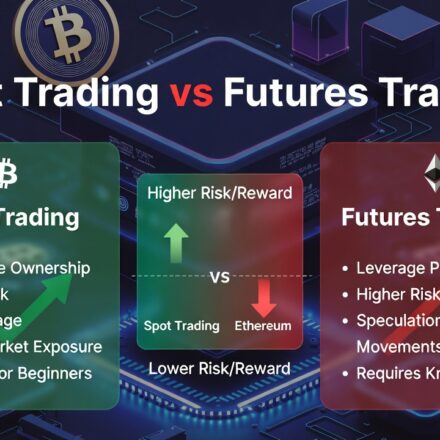
- Spot Trading: You buy the actual cryptocurrency (e.g., BTC or USDT) with your funds and own it outright. Sell later for profit. Simple, no borrowing, no forced liquidation. Ideal starting point for most Africans.
- Futures / Perpetual Trading: You speculate on price direction using leverage (e.g., 5x or 10x). You don’t own the asset — you’re betting on up or down. Gains (and losses) are multiplied, but wrong moves can liquidate your position entirely.
What Drives Price Movements in 2026?
- Global news & events (ETF approvals, regulation changes, halvings)
- Investor sentiment & fear/greed cycles
- Whale/large-player activity
- Macro factors (interest rates, USD strength, inflation in emerging markets)
- Africa-specific: remittance flows, local currency depreciation (NGN, GHS, ZAR), mobile money integration
4. Step-by-Step: Start Trading Today (Africa Focus)
- Choose a reputable, accessible exchange
Nigeria: Binance P2P (dominant), Bybit, Busha, Quidax
South Africa: Luno, VALR, AltCoinTrader (FSCA-licensed)
Ghana: Binance P2P, Yellow Card, or emerging local VASPs post-2026 licensing
Prioritize: P2P fiat ramps, mobile app quality, security features, and regulatory status in your country. - Complete KYC / verification
Almost all serious platforms require ID upload (passport, national ID, utility bill). This unlocks higher limits and protects against fraud. In regulated markets (South Africa especially), KYC is mandatory and non-negotiable. - Fund your account (start small)
Use P2P: Sell NGN/GHS/ZAR for USDT via bank transfer or mobile money.
Recommended beginner amount: ₦20,000–100,000 (or equivalent) — enough to learn without devastating loss. - Practice on demo / paper trading first
Binance, Bybit, and several South African platforms offer demo modes. Trade fake money for 4–8 weeks to test strategies without risk. - Learn structure before going live
Complete education (this guide + free course + Udemy) → define your risk rules → choose 1–2 simple strategies → only then place real trades.
5. Best Beginner Strategies That Still Work in 2026
Focus on 1–2 strategies and master them deeply rather than jumping between shiny new ideas.
- Trend Following
“The trend is your friend.” Identify the dominant direction (higher highs/lows = uptrend) and trade in that direction. Use 50/200 EMA crossover or trendline breaks for confirmation.
Africa example: During 2025 recovery, many Nigerian traders rode BTC/USDT uptrends using 4h charts. - Swing Trading
Capture medium-term moves (3–14 days). Enter on pullbacks in strong trends or breakouts from consolidation. Lower time commitment — check charts 1–2× daily. - Breakout Trading
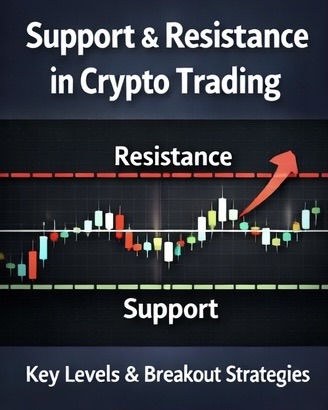
Enter when price decisively breaks support/resistance with increased volume. Set stop below breakout level. High reward but needs confirmation to avoid fakeouts. - Dollar-Cost Averaging (DCA)
Invest fixed amounts regularly (e.g., ₦10,000 weekly into BTC/USDT) regardless of price. Reduces timing risk in volatile markets like crypto in Africa.
Beginner advice: Avoid scalping or high-leverage day trading until you have 6–12 months of consistent results.
6. Reading Market Trends & Structure
Markets move in three states — learn to identify them quickly:
- Uptrend: Series of higher highs and higher lows. Trade longs (buy).
- Downtrend: Lower highs and lower lows. Avoid buying or consider shorts (advanced).
- Sideways / Range: Price oscillates between support and resistance. Trade bounces or wait for breakout.
Tools to confirm trend:
- Moving averages (50/200 period EMA crossover)
- Trendlines: Connect swing highs (downtrend resistance) or lows (uptrend support)
- Market structure: Look for swing points — breaks of previous highs/lows signal trend change
7. Candlestick Charts – Your Foundation
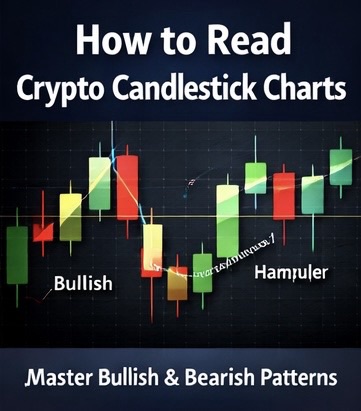
Each candlestick shows price action in a chosen timeframe (1m, 15m, 1h, 4h, daily, etc.):
- Body: Open to close price range
- Wicks / shadows: High and low extremes
- Bullish (green/up): Close > Open
- Bearish (red/down): Close < Open
High-probability beginner patterns to master:
- Doji: Open ≈ close → indecision / potential reversal
- Hammer / Inverted Hammer: Small body + long lower/upper wick → possible bottom/top reversal
- Bullish / Bearish Engulfing: Large candle fully engulfs previous opposite candle → strong reversal signal
- Marubozu: Full body, no/little wicks → strong conviction in direction
Always confirm patterns with volume, support/resistance, and trend context — never trade isolated candles.
Deep dive: Candlestick Patterns Explained and How to Read Crypto Candlesticks (Beginner to Advanced).
8. Essential Indicators Every Beginner Needs
Use 2–3 indicators together — never rely on one alone. Here are the most practical for 2026 beginners:
Relative Strength Index (RSI) – Momentum & Overbought/Oversold
Scale 0–100. Measures speed & change of price movements.
- >70 = Overbought → possible pullback (sell/avoid buying)
- <30 = Oversold → possible bounce (consider buying in uptrend)
- Divergence: Price makes higher high but RSI lower high → weakening momentum → reversal warning
Moving Average Convergence Divergence (MACD)
Shows relationship between two EMAs. Key signals:
- Line crossover: MACD line crosses signal line → momentum shift
- Histogram: Growing bars = strengthening trend
- Zero-line cross: Above zero = bullish bias
Moving Averages (SMA / EMA)
Smooth price to reveal trend.
- 50-period EMA: Short/medium trend
- 200-period EMA: Long-term direction (“death/golden cross” when 50 crosses 200)
- Use EMA over SMA for faster reaction in volatile crypto
9. Risk Management – Protect Your Capital First
Risk management is what separates long-term survivors from gamblers who blow up accounts. In volatile African markets—where naira/cedi/rand swings, power outages, or mobile data costs can force rushed decisions—poor risk control is the #1 reason beginners lose everything.
Core Principles Explained in Depth:
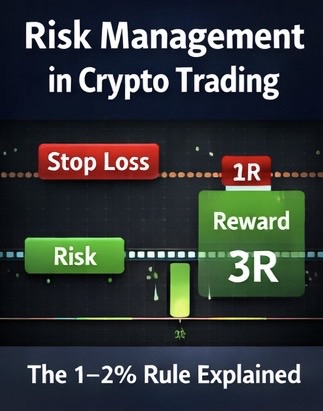
- Risk only 1–2% of total capital per trade
This preserves your account even after a string of losses. Example: With a ₦100,000 account, risk max ₦1,000–2,000 per trade. If your stop-loss is 5% below entry, position size = risk amount ÷ stop distance = ₦2,000 ÷ 0.05 = ₦40,000 worth of crypto. Never exceed this. - Always use stop-loss orders
Set automatic exits to limit losses. On Binance/Bybit (popular in Nigeria/Ghana), use “Stop Market” or “Stop Limit”. In South Africa, FSCA-licensed platforms like Luno or VALR enforce better order types. Never move stops further away during a trade— that’s emotional override. - Position sizing formula
Position Size = (Account Balance × Risk %) ÷ (Entry Price – Stop Price) / Entry Price
Real example (Nigeria trader): ₦200,000 account, 1% risk (₦2,000), BTC at $90,000, stop 4% below ($86,400). Distance = $3,600. Size = ₦2,000 ÷ ($3,600 / $90,000) ≈ 0.005 BTC (or equivalent in USDT). - Avoid over-leverage
Futures/perps amplify everything. Start with 1–3x max (or none). High leverage (10x+) leads to liquidation in 10–20% swings—common in crypto. In regulated markets like South Africa, FSCA oversight discourages excessive leverage for retail. - Risk:Reward ratio ≥ 1:2
For every ₦1 risked, target ₦2+ profit. If stop is 3% away, take-profit should be ≥6% away. This means you can be right only 40% of the time and still profit long-term. - No revenge trading or averaging down losers
After a loss, step away—journal why it happened. Never add to losing positions hoping for reversal.
For hands-on practice, see our full guide: Risk Management in Crypto Trading (The 1–2% Rule Explained).
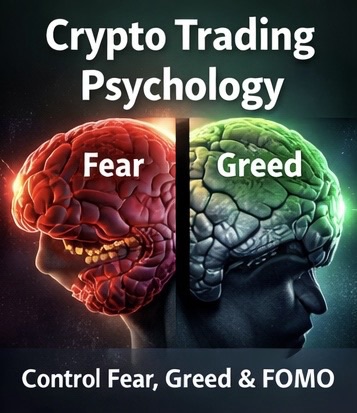
10. Master Your Mind: Trading Psychology
Markets are driven by fear and greed—your own emotions are the biggest enemy. In Africa, where economic pressures (inflation, job scarcity) make trading feel like a “way out,” FOMO and panic hit harder.
Common Psychological Traps & How to Beat Them:
- FOMO (Fear of Missing Out): Seeing BTC pump 30% in hours and jumping in at the top. Fix: Set rules—only enter on confirmed setups (e.g., breakout + volume). Wait for pullbacks.
- Panic selling: Dumping during a 15% dip. Fix: Pre-define stops and take-profits. Remind yourself: volatility is normal—zoom out to weekly charts.
- Overconfidence after wins: Increasing size recklessly. Fix: Stick to 1–2% rule regardless of streak.
- Averaging down losers: Buying more as price falls to “lower average.” Fix: Cut losses quickly—small losses are tuition.
Build Discipline:
- Keep a trading journal: Date | Asset | Entry/Exit Reason | Emotion | Outcome | Lesson. Review weekly.
- Set session rules: Trade only 1–2 hours/day, no trading after 9 PM if tired.
- Use checklists before every trade: Does it meet strategy? Risk ≤1–2%? Reward ≥2x?
- Take breaks after 3 losses or big wins—walk away for a day.
Deep dive: Crypto Trading Psychology: How to Control Fear, Greed & FOMO.
11. Spot vs Futures – Which One for Beginners?
Spot Trading (Recommended for Beginners)
You buy and own the actual asset (e.g., BTC/USDT). No expiry, no liquidation risk from leverage. Pros: Simple, own the coin for long-term, lower stress. Cons: Slower gains in bull runs. In Nigeria/Ghana, use P2P spot to buy with bank transfer. In South Africa, FSCA-licensed spot on Luno/VALR is fully compliant.
Futures/Perpetual Trading
Speculate on price with leverage (no ownership). Pros: Amplify gains, short-selling possible. Cons: Liquidation risk high—wrong move wipes margin. Start only after 6+ months spot mastery, ≤5x leverage. Regulated futures available on licensed platforms in South Africa; in Nigeria/Ghana, use global exchanges cautiously (check local tax/reporting).
Beginner Verdict: Master spot first. Add low-leverage futures later for hedging/remittances.
12. Avoid Scams & Protect Yourself
Africa sees high scam volume due to economic desperation and mobile money popularity. Common types in 2026:
- Ponzi/pyramid schemes: “Invest ₦50k, get ₦500k in 30 days” via WhatsApp groups.
- Fake exchanges/apps: Clone Binance/Bybit sites stealing deposits.
- Impersonation: Fake Baeolah/ influencers DMing “signals” or “giveaways.”
- Phishing: Fake links in emails/SMS asking for seed phrases.
Red Flags & Defenses:
- Guaranteed returns? Scam.
- Unsolicited DMs/groups? Block/report.
- Pressure to act fast? Walk away.
- Verify: Check URLs (https://binance.com not binanace.com), use official apps from stores.
- Report: In Nigeria to EFCC/SEC, South Africa FSCA, Ghana BoG/SEC.
13. Security Must-Dos in 2026
Your crypto = your responsibility. Hacks and thefts remain common despite better exchange security.
- Enable 2FA everywhere: Use authenticator app (Google/Authy), NOT SMS (SIM swap risk high in Africa).
- Strong, unique passwords: Use manager like Bitwarden or 1Password.
- Hardware wallet for holdings >₦500k: Ledger/Trezor—keep offline. Great for long-term in volatile economies.
- Never click suspicious links: Verify sender, double-check URLs.
- Avoid public Wi-Fi: Use mobile data or VPN.
- Double-check addresses: Copy-paste + verify first/last characters.
- Withdraw to self-custody regularly: Don’t leave large amounts on exchanges.
14. FAQ – Common Beginner Questions
Is crypto trading profitable in 2026?
Yes—for disciplined traders. Expect 40–60% win rate with good risk/reward. Most fail from emotions/hype, not markets.
How much capital to start?
₦20,000–100,000 (or ZAR/GHS equivalent). Focus on learning—small size builds habits without big pain.
Is crypto legal in Nigeria/South Africa/Ghana 2026?
Yes—all regulated (SEC Nigeria, FSCA South Africa, BoG/SEC Ghana). Use licensed platforms, report gains for tax.
Mobile trading safe?
Yes—Binance/Bybit apps excellent. Enable biometrics + 2FA. Avoid sideloading APKs.
Best time to trade?
Any—crypto 24/7. Watch London/NY overlap (high volume), avoid low-liquidity weekends.
15. Your 2026 Beginner Roadmap
- Finish Baeolah free course + Udemy Technical Analysis (candles, indicators, strategies).
- Open demo account on Binance/Bybit → practice spot for 1–2 months.
- Start live with small capital (₦/ZAR/GHS 50k max) — strict 1–2% risk, journal every trade.
- Master one strategy (e.g., trend following + RSI) before experimenting.
- Review weekly: What worked? Emotional slips? Adjust rules.
- After 3–6 months consistent demo/live results, scale slowly (add 20–50% capital).
- Stay updated: Follow Baeolah blog, avoid Telegram “signals” groups. Explore basics like How Blockchain Works.
Ready to Build Real Trading Skills in 2026?
👉 Start Your FREE Crypto Trading Journey TodayEducation first. Discipline always. Consistent growth follows.
© Baeolah 2026 | Discipline Over Hype | Tailored for Nigeria, South Africa, Ghana & Africa






[…] 👉 Read the Complete Beginner’s Guide to Crypto Trading […]