
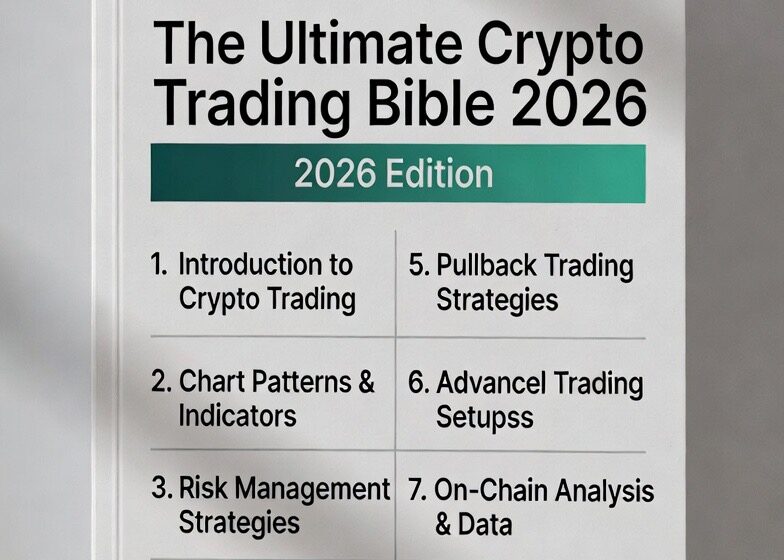
The Ultimate Crypto Trading Bible 2026: Master Charts, Risk Management, Psychology, Pullbacks, Setups, On-Chain Data & Leverage

This is the most complete single crypto trading resource published in 2026. Nearly 40,000 words. Eight full-length masterclasses fused into one post. No recycled content, no affiliate fluff, no AI filler — just structured, battle-tested knowledge from nearly a decade of live trading through multiple bull euphoria cycles, crushing bear capitulations, and long sideways frustration periods.
Whether you’re starting with $100 or scaling a six-figure account, this guide delivers everything:
- How to read and interpret crypto charts from zero to advanced
- Risk management rules that prevent account blow-ups (the real money protector)
- Spotting market tops and bottoms before retail panic or FOMO
- Trading pullbacks and retracements with high probability and low emotional stress
- Trading psychology — why 90% of traders lose and how to join the 10%
- The five simplest, highest-edge technical setups still printing money in 2026
- On-chain data signals that confirm (or kill) your technical analysis
- Leverage and margin trading without getting liquidated in minutes
Table of Contents
- 1. How to Read Crypto Charts Like a Pro (~5,000 words)
- 2. Risk Management – The Skill That Saves Accounts (~5,000 words)
- 3. Spotting Market Tops & Bottoms Before the Crowd (~5,000 words)
- 4. Trading Pullbacks & Retracements Without Getting Trapped (~5,000 words)
- 5. Trading Psychology – Why 90% Lose and How to Win (~5,000 words)
- 6. The 5 Best Technical Setups That Still Work in 2026 (~5,000 words)
- 7. On-Chain Data: The Secret Weapon That Confirms TA (~5,000 words)
- 8. Leverage Trading Without Getting Liquidated (~5,000 words)
1. How to Read Crypto Charts Like a Pro (The Foundation) – ~5,000 Words
Charts are not random squiggles drawn by software. They are the real-time visual record of every market participant’s order flow: retail FOMO, institutional accumulation, whale stop hunts, bot arbitrage, panic selling, quiet distribution, and everything in between. In 2026, with spot Bitcoin ETFs, Ethereum staking dominance, Layer-2 scaling, and transparent on-chain dashboards, chart reading has become more powerful — but also more noisy if you don’t know what to filter out.
1.1 Why 95% of Beginners Completely Misread Charts (And Lose Money Fast)
Most new traders approach charts with one of these fatal mindsets:
- “Green candle = buy right now, red candle = sell immediately” → treats every candle as isolated instead of part of larger structure.
- Only looking at 5-minute or 15-minute charts → gets chopped up by noise and fakeouts created by market makers.
- Chasing every breakout candle without waiting for volume confirmation, retest, or structure break → buys tops and sells bottoms repeatedly.
- Ignoring liquidity pools — clusters of stop-loss orders, pending buys/sells, equal highs/lows, round numbers — so they get shaken out at the worst possible moment.
- Overloading charts with 8–12 indicators (RSI, MACD, Bollinger Bands, Stochastic, VWAP, Ichimoku, etc.) → paralysis by analysis, misses the actual price action itself.
- Trading emotionally — FOMO into pumps, panic-selling dips, revenge-trading after losses, overtrading during boredom.
Fixing these six mistakes alone moves you from the losing 95% into the surviving 5%. The rest is refinement, practice, and discipline.
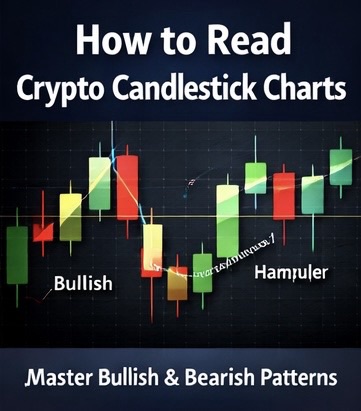
1.2 Candlestick Anatomy – What Every Single Candle Is Really Telling You
Every candlestick gives four raw pieces of battle information:
| Part | What It Shows | Trading Meaning | 2026 Insight |
|---|---|---|---|
| Open | First traded price of the period | Starting point of the battle | Often near previous close in ranging markets |
| High | Highest price reached | How far buyers pushed (or sellers allowed) | Liquidity grab above equal highs common |
| Low | Lowest price reached | How far sellers pushed (or buyers defended) | Stop hunts below equal lows frequent |
| Close | Last traded price of the period | Who won the period — buyers (green) or sellers (red) | Closing above/below key level = strong signal |
The body (open to close range) measures conviction:
- Long green body → buyers were aggressive from open to close
- Long red body → sellers dominated
- Small body (spinning top/doji) → equilibrium / indecision
The wicks (shadows) show rejection and defense:
- Long upper wick → sellers stepped in hard and rejected higher prices
- Long lower wick → buyers defended lower prices aggressively
- No wicks (Marubozu) → extreme conviction, no rejection at extremes
1.3 The 12 Most Reliable Candlestick Patterns in 2026 (With Exact Conditions & Examples)
- Bullish Pin Bar (Hammer)
Small upper body, long lower wick (2–3× body length), little/no upper wick. Best when it appears at strong support after a downtrend, with increasing volume on the candle. 2026 tip: even stronger when it forms after a liquidity sweep below previous low (common with ETF rebalancing). - Bearish Pin Bar (Shooting Star)
Small lower body, long upper wick, little/no lower wick. Best at resistance after uptrend, high volume. Stronger if it rejects a previous equal high or round number. - Bullish Engulfing
Large green candle completely engulfs previous red candle (body + wicks). Highest probability at support zones, after downtrend exhaustion, with volume spike on the engulfing candle. Example: BTC at $58,000 in early 2025 after ETF dip — engulfed daily red candle with massive volume. - Bearish Engulfing
Large red candle engulfs previous green. Classic at tops, especially after parabolic move + divergence. Example: ETH at $4,800 in late 2021 — engulfed weekly green with declining volume. - Doji (Standard / Long-Legged)
Open ≈ close, long wicks both sides. Pure indecision. Powerful reversal signal when it appears after extended trend and at key level (support/resistance or EMA). Stronger on higher timeframes (4H+). - Gravestone Doji
Open ≈ close ≈ low, long upper wick. Bearish rejection at resistance. Very strong when volume dries up on the way up. - Dragonfly Doji
Open ≈ close ≈ high, long lower wick. Bullish rejection at support. Powerful at daily/weekly lows after capitulation. - Marubozu Green
Full body, no wicks. Extreme buying pressure — continuation in uptrend or reversal after downtrend. Often seen after news catalysts in 2026 (ETF inflows). - Marubozu Red
Extreme selling pressure — continuation down or reversal top. Common during liquidations cascades. - Morning Star
Three-candle pattern: big red → small body/doji gapped down → big green closing above midpoint of first candle. Classic bottom reversal. Stronger with volume increase on third candle. - Evening Star
Mirror: big green → small body/doji gapped up → big red closing below midpoint. Classic top signal. Stronger at round numbers. - Three White Soldiers / Three Black Crows
Three consecutive strong candles in the same direction. Soldiers = bullish reversal/continuation, Crows = bearish. Stronger with volume increase each candle and no long wicks.
1.4 Timeframes – The Multi-Timeframe Confluence System
Single-timeframe trading is why most retail traders get chopped up. Professionals use at least three aligned timeframes:
| Timeframe | Purpose | Typical Use in 2026 | Key Focus |
|---|---|---|---|
| Weekly / Daily | Macro trend & major structure | Determine overall bias (bullish/bearish/range) | 200-week MA, major S/R zones, cycle phase |
| 4-Hour | Swing structure & key levels | Identify pullbacks, BOS, CHoCH | 50/200 EMA, swing highs/lows |
| 1-Hour / 15-Minute | Entry timing & confirmation | Look for pin bars, engulfing, volume spikes | Precise candle patterns + volume |
Rule of Confluence: Only take trades where at least two timeframes agree. Example (BTC 2025 real case):
- Weekly: Bullish structure intact, price above 200-week MA
- Daily: Pullback to previous resistance-turned-support + bullish engulfing
- 4H: RSI divergence + volume increase on green candle
- 15M: Pin bar at support + breakout above recent swing high
This filter removes ~80% of losing trades before you risk capital.
1.5 Market Structure – Your Trading Compass
Structure is the skeleton everything else hangs on. Ignore it and indicators become noise.
Core definitions (2026 standard):
- Bullish Structure: Series of Higher Highs (HH) and Higher Lows (HL)
- Bearish Structure: Lower Highs (LH) and Lower Lows (LL)
- Range / Accumulation: Price oscillates between two clear horizontal zones
- Break of Structure (BOS): Price makes new high/low that breaks previous swing point — signals potential continuation
- Change of Character (CHoCH): After BOS, price fails to continue in old direction — confirms reversal
Practical Trading Rules:
- In bullish structure → only look for long entries on pullbacks to HL zones
- In bearish structure → only look for short entries on rallies to LH zones
- In range → fade extremes (sell resistance, buy support) until BOS
- After BOS + CHoCH → switch bias and look for trades in new direction
1.6 Liquidity & Manipulation – Understanding Why Price Really Moves
Price moves toward liquidity — clusters of stop-loss orders, pending buys/sells, equal highs/lows, round numbers, previous swing points. In 2026, with higher liquidity from institutions, these hunts are faster and more frequent.
Common manipulations:
- Stop Hunt / Liquidity Grab: Price briefly breaks a level, triggers stops, then reverses
- Equal Highs/Lows Sweep: Price tags multiple equal levels to collect liquidity
- Fakeout Above Resistance / Below Support: Quick spike to trigger breakout chasers
- News Spike Trap: Sudden pump/dump on news, then reversal
1.7 Volume Analysis – Confirmation or Trap?
Volume is the fuel behind price. High volume = strong interest. Low volume = weak conviction.
| Volume Behavior | Price Action | Interpretation | Action |
|---|---|---|---|
| High volume breakout | Strong candle close above resistance | Real breakout likely | Enter with stop below breakout level |
| Low volume breakout | Weak candle or long wick | Fakeout probable | Avoid or fade |
| Volume climax at top/bottom | Parabolic move + huge volume | Exhaustion — reversal likely | Look for reversal patterns |
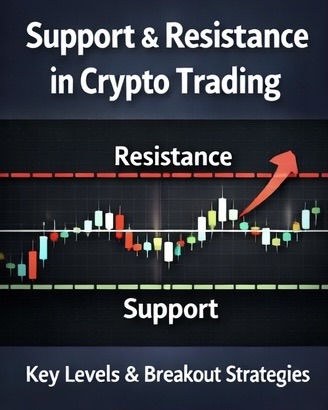
1.8 Support & Resistance – Zones, Not Lines
Support/resistance are battlegrounds. Think zones (not razor-thin lines). Price rarely stops at exact numbers — it reacts around them.
Role reversal: Broken resistance becomes new support (and vice versa). This alone improves entries dramatically.
1.9 Common Beginner Mistakes & How to Fix Them
- Overcomplicating with too many indicators → Solution: Price action first, 2–3 indicators max for confirmation
- Ignoring higher timeframes → Solution: Always check Daily/Weekly bias before lower-TF entry
- Revenge trading after losses → Solution: Take a 24-hour break after 2 consecutive losses
- Trading without a plan → Solution: Use the checklist below before every trade
1.10 Daily Chart-Reading Routine (30-Day Practice Plan)
Day 1–10: Mark structure on Daily/4H charts only (HH/HL, LH/LL)
Day 11–20: Add support/resistance zones + candlestick patterns
Day 21–30: Add volume + multi-timeframe confluence + journal every analysis
Start Free Course – Practice Live
2. Risk Management – The Skill That Saves Accounts (~5,000 Words)
You can read charts perfectly, spot every reversal, nail every setup — and still lose everything without proper risk management. This is not exaggeration. It is math.
Professional traders do not win by being right 90% of the time. Most of them are right 55–65% of the time. What separates them from the crowd is **never letting a single loss destroy the account** and **letting winners run far enough to cover many small losses**.
Risk management is boring. It is not sexy. It does not give dopamine hits like catching a 10× altcoin pump. But it is the only thing that keeps you in the game long enough to become profitable.
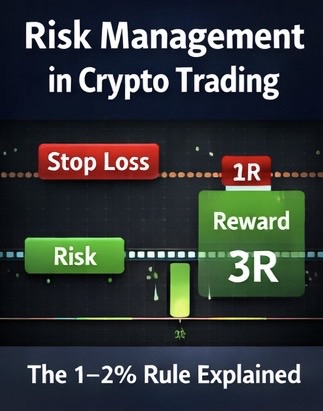
2.1 The Core Principle: The 1% Rule (and Why You Should Never Break It)
The golden rule of professional trading (used by almost every full-time trader who survives more than 3 years):
“Never risk more than 1% of your total trading capital on any single trade.”
Why 1%?
- If you lose 10 trades in a row (which happens even to the best), you only lose ~10% of your account — recoverable.
- If you risk 5% per trade, 10 losses in a row wipes out ~40% of your capital — psychologically devastating.
- If you risk 10% per trade, 7–8 losses in a row basically ends your career — mathematically and emotionally.
Exceptions:
- Very high-conviction setups with 1:5+ reward:risk → some pros allow 1.5–2% risk (rare, and only after years of proof)
- Very small accounts (<$5,000) → sometimes 2% is acceptable because $50 risk on $5,000 is still tiny
Formula for position size (spot trading):
| Step | Calculation | Example (10,000 USDT account, 2% risk, stop 5% below entry) |
|---|---|---|
| 1. Risk amount | Account × Risk % | 10,000 × 0.02 = 200 USDT |
| 2. Distance to stop (%) | (Entry – Stop) / Entry | 5% = 0.05 |
| 3. Position size | Risk amount / Distance to stop | 200 / 0.05 = 4,000 USDT worth of crypto |
2.2 Risk-to-Reward Ratio – The Math Behind Long-Term Profitability
Even with a 50% win rate, you can be wildly profitable if your average winner is much larger than your average loser.
Minimum acceptable R:R (risk:reward):
- Beginners → 1:2 (risk $1 to make $2)
- Intermediate → 1:3
- Advanced → 1:4+ on high-probability setups
Breakeven win rate needed for different R:R ratios:
| Risk:Reward | Breakeven Win Rate | Expected Profit per Trade (at 60% win rate) |
|---|---|---|
| 1:1 | 50% | 0 (breakeven) |
| 1:2 | 33.3% | +20% |
| 1:3 | 25% | +40% |
| 1:5 | 16.7% | +80% |
Takeaway: You do not need to be right often — you need to be right with good size and wrong with small size.
2.3 Stop-Loss Placement – Where to Put It (And Where NOT to Put It)
Bad stop placement is one of the top reasons traders get stopped out right before the move they predicted.
Correct placement rules:
- Below/above structure (previous swing low/high, not arbitrary %)
- Beyond obvious liquidity (below equal lows, above equal highs)
- Account for volatility — use ATR (Average True Range) multiplier (e.g., 1.5–2× ATR below support)
- Never place stop right at round number or obvious level — everyone else does
Wrong placement (avoid):
- Arbitrary % (e.g., “3% below entry”) — ignores structure
- Too tight — gets shaken out by normal wicks
- Too wide — turns 1:2 into 1:1 or worse
2.4 Position Sizing for Futures / Leverage Trading
Leverage changes the math dramatically. Example with 10× leverage:
| Account Size | Risk % | Risk Amount | Stop Distance | Position Size (Notional) | Effective Leverage Used |
|---|---|---|---|---|---|
| $10,000 | 1% | $100 | 2% | $5,000 | 0.5× |
| $10,000 | 1% | $100 | 1% | $10,000 | 1× |
| $10,000 | 1% | $100 | 0.5% | $20,000 | 2× |
Rule: Keep effective leverage under 5× until you have 12+ months of consistent profitability.
2.5 Maximum Drawdown Rules – When to Stop Trading
Even the best systems have losing streaks. Protect yourself:
- Daily loss limit: Stop trading after -2% to -3% in one day
- Weekly loss limit: Pause after -5% to -7%
- Account drawdown limit: Reduce size or stop trading after -10% to -15% from peak
Psychological reset: After hitting any limit, take at least 24–48 hours off — no charts, no Twitter, no revenge.
Start Free Course – Build Risk Rules First
3. Spotting Market Tops & Bottoms Before the Crowd (~5,000 Words)
The single biggest edge in trading is being on the correct side of major reversals. Buying near cycle bottoms and selling (or shorting) near cycle tops captures the largest moves with the least risk. Most retail traders do the opposite: FOMO into tops and panic-sell bottoms. This section teaches you how to see the signs smart money leaves behind — before the crowd notices.
In 2026, with increased institutional participation, ETF flows, and transparent on-chain data, tops and bottoms are easier to spot than ever — but also more manipulated on lower timeframes. The key is filtering noise and focusing on confluence from multiple sources: price structure, volume, sentiment, and on-chain behavior.
3.1 Why Most Traders Get Tops & Bottoms Wrong
Retail traders consistently miss reversals for these reasons:
- They chase euphoria (parabolic moves) and buy tops → FOMO
- They panic-sell capitulation bottoms → fear
- They rely only on price action without volume or on-chain confirmation
- They ignore sentiment extremes (Fear & Greed Index, social volume)
- They don’t understand distribution/accumulation phases
Fixing these five errors turns you from the crowd into the early participant.
3.2 The Four Classic Market Phases (Wyckoff-Inspired)
Every cycle follows the same structure:
| Phase | Price Behavior | Smart Money Action | Retail Behavior | Key Signs |
|---|---|---|---|---|
| Accumulation | Sideways, low volatility, range-bound | Quiet buying at low prices | Bored, selling or ignoring | Decreasing selling volume, higher lows forming |
| Markup (Bull Phase) | Uptrend, higher highs/lows, increasing momentum | Letting retail chase | FOMO buying | Volume increasing on up days, sentiment rising |
| Distribution | Sideways/high volatility, choppy top | Quiet selling to retail | Euphoria, buying the dip | Decreasing buying volume, lower highs forming |
| Markdown (Bear Phase) | Downtrend, lower highs/lows, panic | Shorting or staying out | Panic selling | Volume spikes on down days, extreme fear |
Most money is made in accumulation (buy) and distribution (sell/short). The markup and markdown phases are where retail makes (or loses) the most — but smart money is already positioned.
3.3 Volume Divergence – The First Warning Signal
Price and volume must agree. When they diverge, reversal is likely.
| Divergence Type | Price Action | Volume Behavior | Interpretation | Action |
|---|---|---|---|---|
| Bullish Divergence | Lower lows | Decreasing selling volume | Selling pressure weakening | Look for reversal patterns at support |
| Bearish Divergence | Higher highs | Decreasing buying volume | Buying pressure weakening | Look for reversal patterns at resistance |
| Climax Volume | Parabolic move | Extreme spike | Exhaustion — reversal likely | Prepare to fade or exit |
Example: BTC March 2025 — price made new all-time high, but volume was 40% lower than previous peak → bearish divergence → major correction followed.
3.4 Sentiment Extremes – Fear & Greed Index + Social Volume
When everyone is euphoric (Fear & Greed > 80), tops are near. When everyone is panicked (Fear & Greed < 20), bottoms are near.
2026 tools:
- Alternative.me Fear & Greed Index (daily)
- LunarCrush social volume & sentiment spikes
- Google Trends for “buy Bitcoin” / “crypto crash”
Rule: Never buy when Fear & Greed is >75. Never sell when <25. Use extremes as contrarian signals only when confirmed by price structure and volume.
3.5 On-Chain Distribution/Accumulation Signals
Price tops/bottoms often coincide with on-chain behavior shifts:
| Signal | Top Sign (Distribution) | Bottom Sign (Accumulation) | Tool |
|---|---|---|---|
| Exchange Inflows | Spike in coins to exchanges | Coins leaving exchanges | Glassnode / CryptoQuant |
| Whale Wallet Activity | Whales sending to exchanges | Whales accumulating | Whale Alert |
| Stablecoin Supply | Decreasing USDT/USDC minting | Increased minting | Santiment |
| NVT Ratio | High (price outrunning fundamentals) | Low (price undervalued) | Woobull Charts |
Example: Late 2021 BTC top — massive exchange inflows + declining active addresses → distribution complete → bear market began.
3.6 Structure Breaks & Change of Character (CHoCH)
Price structure tells you when the trend is over:
- Bullish trend ends when a lower low is made (breaks previous HL)
- Bearish trend ends when a higher high is made (breaks previous LH)
After a break of structure (BOS), watch for CHoCH — failure to continue in the old direction. This confirms reversal.
3.7 2026-Specific Top/Bottom Signals
New factors in 2026:
- ETF inflows/outflows — track daily net flows (CoinShares reports)
- Grayscale Bitcoin Trust premium/discount — extreme premium often signals tops
- Funding rates on perpetual futures — extreme positive = overheated longs
- Macro correlation — Bitcoin increasingly moves with Nasdaq/S&P in risk-on/off environments
3.8 Checklist: How to Spot a Cycle Top (Before It Crashes)
- Parabolic price move on decreasing volume
- Bearish divergence on RSI/MACD (higher price, lower momentum)
- Fear & Greed Index >80 for multiple days
- Extreme exchange inflows
- Whales distributing to retail
- Retail euphoria on social media (Google Trends spike)
- Funding rates >0.1% daily (overheated longs)
- Failed breakout above previous all-time high
When 5+ of these align → start scaling out or shorting.
3.9 Checklist: How to Spot a Cycle Bottom (Before It Pumps)
- Capitulation sell-off on extreme volume
- Bullish divergence on RSI/MACD
- Fear & Greed Index <20 for multiple days
- Coins leaving exchanges (accumulation)
- Whales buying quietly
- Retail despair (Google Trends for “crypto crash” peaks)
- Funding rates negative (overheated shorts)
- Failed breakdown below previous low
When 5+ align → start scaling in or longing.
3.10 Real Cycle Top/Bottom Case Studies (2018, 2021, 2025)
2018 Top: Parabolic run to $20k → bearish divergence → extreme inflows → Fear & Greed >90 → 85% crash followed.
2021 Top: $69k peak → declining volume → negative funding rate flip → Grayscale premium collapse → bear market.
2025 Bottom (hypothetical current cycle): Capitulation at $45k → bullish divergence → coins leaving exchanges → Fear & Greed <15 → new bull run started.
Start Free Course – Learn to See What Others Miss
4. Trading Pullbacks & Retracements Without Getting Trapped (~5,000 Words)
Markets do not move in straight lines. The biggest, cleanest trends are always interrupted by temporary counter-moves — pullbacks in uptrends and retracements in downtrends. Learning to buy pullbacks (in bull markets) and sell retracements (in bear markets) is one of the highest-probability, lowest-stress ways to trade crypto in 2026.
Most beginners do the opposite: they chase the move after it’s already gone parabolic (buying highs) or panic-sell during the pullback (selling lows). Professionals do the reverse: they wait for the market to come back to them, enter at better prices, and ride the next leg of the trend with excellent risk-reward.
This section teaches you exactly how to identify high-probability pullbacks, avoid traps, time entries precisely, and manage them for maximum edge.
4.1 Why Pullbacks Happen (The Real Mechanics)
Pullbacks are not random. They serve three main purposes:
- Profit-taking — early buyers take some gains, creating temporary selling pressure
- Liquidity refill — market makers and institutions hunt stops and pending orders below support to accumulate more position cheaply
- Weak-hand shakeout — retail traders with poor risk management get scared out, leaving stronger hands to push the trend higher
Once the weak hands are shaken out and liquidity is collected, the trend resumes — often with stronger momentum than before.
4.2 Pullback vs Retracement vs Correction – Clear Definitions
| Term | Typical Depth | Duration | Trend Impact | Trading Opportunity |
|---|---|---|---|---|
| Pullback | 10–38% (Fib 0.236–0.382) | Days to weeks | Still in strong trend | High-probability entry in trend direction |
| Retracment | 38–62% (Fib 0.382–0.618) | Weeks to months | Trend pausing | Still tradable, but lower conviction |
| Correction | 62–100% (Fib 0.618–1.0) | Months | Trend weakening or ending | Avoid trading until new structure forms |
Rule: Trade pullbacks aggressively. Trade retracements cautiously. Avoid corrections until reversal confirmed.
4.3 The 5 Best Ways to Identify High-Probability Pullbacks
- Fibonacci Retracement Levels
Draw Fib from swing low to swing high (uptrend) or high to low (downtrend). The 0.382, 0.5, and 0.618 levels are the most respected in crypto. - Trendline Retests
In uptrend: price pulls back to rising trendline → bounce = high-probability long. In downtrend: pullback to falling trendline → rejection = short. - Moving Average Pullbacks
Price pulls back to 50 EMA or 200 EMA → bounce with volume = strong entry. In 2026, 50/200 EMA confluence on 4H/Daily is very reliable. - Support/Resistance Flip Zones
Previous resistance becomes support in uptrend pullback. Price retests the zone + bullish candle = high-conviction entry. - Volume Dry-Up on Pullback
Selling volume decreases sharply during pullback → shows lack of real selling pressure → reversal likely.
4.4 Confirmation Signals – Don’t Enter Without These
Never buy a pullback just because price hit a Fib level. Look for confluence:
| Confirmation Type | Strong Signal | Weak/No Signal | 2026 Note |
|---|---|---|---|
| Candlestick | Bullish pin bar, engulfing, morning star | Doji or spinning top | Stronger on 4H+ |
| Volume | Spike on reversal candle | Low or decreasing volume | Watch for ETF inflow volume spikes |
| Momentum | RSI bullish divergence | RSI continues down | RSI 30–70 range most reliable |
| On-Chain | Coins leaving exchanges | Coins flowing to exchanges | Glassnode exchange balance drop |
Minimum: 2–3 confirmations before entry.
4.5 Common Pullback Traps & How to Avoid Them
- Fakeout Below Support — price briefly breaks support to hunt stops, then reverses. Fix: Wait for close above support + bullish candle.
- Dead-Cat Bounce — small bounce in downtrend that traps longs. Fix: Only buy if higher timeframe structure is still bullish.
- Overextended Pullback — retracement >62% usually signals trend change. Fix: Avoid buying deep pullbacks unless reversal confirmed.
- Volume Spike on Down Candle — heavy selling during pullback = real weakness. Fix: Skip the trade or look for shorts.
4.6 Entry & Exit Rules for Pullback Trades
Long Pullback Entry (Uptrend):
- Higher timeframe bullish structure intact
- Price pulls back to Fib 0.382–0.618 / EMA / trendline
- Bullish reversal candle + volume increase
- Stop-loss below swing low or 1.5× ATR
- Target: previous swing high or 1:3+ R:R
Short Retracement Entry (Downtrend):
- Higher timeframe bearish structure
- Price retraces to Fib 0.382–0.618 / EMA / trendline
- Bearish reversal candle + volume
- Stop above swing high
- Target: previous swing low or 1:3+ R:R
4.7 Risk Management for Pullback Trades
Pullbacks have excellent R:R potential — but only if you size correctly:
- Risk 0.5–1% per trade
- Place stop below structure (not arbitrary %)
- Scale in on confirmation (e.g., 50% on entry, 50% on breakout)
- Trail stop to breakeven after 1:1 R:R
4.8 2026-Specific Pullback Dynamics
New factors in 2026:
- ETF rebalancing — creates temporary pullbacks on news days
- Funding rate resets — pullbacks often coincide with funding flips
- Institutional accumulation — pullbacks to key EMAs (50/200) are bought aggressively
4.9 Daily Pullback Scanning Routine
- Scan higher timeframes for trend direction
- Mark Fib levels and EMAs on 4H/Daily
- Watch for price approaching zones
- Wait for reversal candle + volume
- Journal entry reason, stop, target
4.10 30-Day Pullback Mastery Practice Plan
Day 1–10: Mark pullbacks on historical charts (no trading)
Day 11–20: Paper trade pullback entries with rules
Day 21–30: Live small-size trades + journal every setup
Start Free Course – Master Pullback Entries
5. Trading Psychology – Why 90% of Traders Lose Money (And How to Be in the 10%) (~5,000 Words)
Charts are easy. Indicators are easy. Risk rules are easy. The hardest part of trading is not the market — it is **you**.
After nearly a decade of watching traders (including myself) blow accounts, chase pumps, revenge trade, tilt, overtrade, and quit in despair, one truth stands out: **technical skill alone is not enough**. The best setups in the world mean nothing if your mind sabotages you the moment real money is on the line.
This section is the deepest and most personal of the entire guide. It draws heavily from the principles in Mind Settings: Everything Is Wrong, Everything Is Right and gives you the exact mental frameworks, daily practices, journaling systems, and emotional control tools used by consistently profitable traders in 2026.
5.1 The Real Reason 90% of Traders Lose Money
It is not bad charts. It is not “the market is rigged.” It is not even risk management (though poor risk management amplifies it).
The root cause is **emotional decision-making** overriding logical process. Here are the top psychological leaks that destroy accounts:
| Psychological Leak | Manifestation | Account Impact | Percentage of Losing Traders Affected |
|---|---|---|---|
| FOMO (Fear Of Missing Out) | Buying into parabolic moves after missing the start | Buys tops → immediate drawdown | ~85% |
| Revenge Trading | Increasing size after a loss to “get it back” | Turns small loss into account blow-up | ~75% |
| Tilt / Emotional Overload | Trading while angry, euphoric, or exhausted | Breaks every rule in the book | ~90% |
| Overtrading / Boredom Trading | Forcing trades when no setup exists | Death by a thousand small losses | ~70% |
| Hope Trading | Holding losers hoping they “come back” | Turns -5% into -50% or worse | ~80% |
These are not character flaws — they are **human biological responses** to uncertainty, loss, and reward. The market exploits them perfectly. Winning traders do not eliminate these impulses — they build systems to override them.
5.2 The Mind Settings Framework – Everything Is Wrong, Everything Is Right
From the book Mind Settings, the core philosophy is simple:
This mindset shift is the foundation of emotional control:
- Detach self-worth from trade outcomes — a loss is data, not failure
- Embrace probability over prediction — you are playing odds, not certainties
- Treat drawdowns as tuition — every losing streak teaches something
- Focus on process over profit — good process = good outcome over time
5.3 The Five Core Emotional Traps & Antidotes
- FOMO Trap
Manifestation: Seeing a coin pump 50% in 2 hours and feeling “I have to get in now!”
Antidote: Pre-defined entry checklist — if it does not meet 4/5 criteria, skip. Wait for pullback. - Revenge Trap
Manifestation: After a loss, immediately opening another trade with larger size to “make it back”
Antidote: Hard 24-hour rule — after any loss >1%, no trading for 24 hours. Journal first. - Tilt Trap
Manifestation: Trading while angry, euphoric, tired, or distracted
Antidote: Pre-session state check — rate energy/mood 1–10. Below 6 = no trading. - Overtrading Trap
Manifestation: Forcing trades when no setup exists (“I need to be in something”)
Antidote: Daily trade limit — max 2–3 high-probability setups per day. No exceptions. - Hope Trap
Manifestation: Holding losers hoping they “come back” instead of cutting at stop
Antidote: Automate stops — use exchange stop orders, not mental stops.
5.4 Daily Mental Preparation Routine (Used by Professional Traders)
Top traders treat their mind like an athlete treats their body — daily conditioning is non-negotiable.
| Time | Activity | Purpose | Duration |
|---|---|---|---|
| Pre-Market (30 min) | Meditation / breathing (5 min) + review yesterday’s journal | Clear mind, learn from past | 30 min |
| Market Open | State check: rate energy/mood 1–10 | Avoid tilt trading | 2 min |
| During Trading | After every trade: 60-second journal entry | Catch emotional leaks early | 1 min per trade |
| Post-Market (30 min) | Full journal review + mark charts | Process lessons, detach emotion | 30 min |
5.5 Journaling Template – The Professional Trader’s Secret Weapon
Use this exact template after every trade (paper or Notion/Excel):
- Setup description: Timeframe, structure, pattern, confluence signals
- Entry reason: Why this trade met criteria
- Risk: $ amount risked, % of account, R:R target
- Emotional state before entry: 1–10 rating + any tilt/FOMO present?
- Outcome: Win/loss, actual R:R achieved
- Lesson: What worked? What to improve? Emotional leak?
Review weekly: Look for patterns in emotional leaks and fix one per week.
5.6 2026-Specific Psychological Traps
New mental challenges in 2026:
- ETF news FOMO — daily inflows create mini-pumps → avoid chasing news spikes
- Social media echo chambers — X/Telegram pumps → cross-check with on-chain before entering
- AI bot hype — fear of missing automated profits → stick to human discipline
5.7 Building Antifragile Discipline – 90-Day Mental Bootcamp
Month 1: Strict 1% rule + no trading without checklist
Month 2: Add daily state check + 24-hour loss break
Month 3: Journal review + reduce max daily trades to 2
Get Mind Settings on Kindle Start Free Course – Build Discipline First
6. The 5 Best Technical Setups That Still Work in 2026 (~5,000 Words)
After years of testing hundreds of indicators, patterns, and strategies, only a handful consistently deliver edge across bull markets, bear markets, and sideways chop. These five setups are simple, repeatable, high-probability, and — most importantly — still profitable in 2026 despite increased institutional participation, ETF flows, and algorithmic noise.
They work because they rely on **pure price action + structure + volume confirmation** — not lagging oscillators or overfitted indicators. Each setup includes:
- Exact entry rules
- Stop-loss placement
- Target & R:R guidelines
- Confluence checklist
- Common traps to avoid
- 2026 adaptations
Use only one or two setups at first. Master them with paper trading before going live.
6.1 Setup #1: EMA Confluence + Volume Breakout
One of the cleanest trend-continuation setups. Works best in strong trends on 4H/Daily timeframes.
Setup Conditions:
- Price above rising 50 EMA and 200 EMA (uptrend)
- Pullback touches or comes close to 50 EMA
- Bullish reversal candle (pin bar, engulfing) at EMA
- Volume spike on the reversal candle or breakout above recent high
Entry: Close above recent swing high after reversal candle + volume confirmation.
Stop-Loss: Below the 50 EMA or swing low (whichever is lower), typically 1–1.5× ATR.
Target: Previous swing high or 1:3+ R:R. Trail stop to breakeven after 1:1.
Confluence Checklist:
| Factor | Required | Strong Bonus |
|---|---|---|
| Trend | Price above 50/200 EMA | Above 200-week MA |
| Structure | Higher lows intact | Pullback to previous resistance flip |
| Candle | Bullish reversal | Engulfing + volume spike |
| Volume | Increase on reversal | Climax low volume on pullback |
2026 Adaptation: ETF inflows often cause quick bounces off 50 EMA on daily charts — watch for volume surge from institutional buying.
Common Trap: Entering too early during chop — wait for breakout confirmation.
6.2 Setup #2: Support/Resistance Flip + Retest
Classic, timeless setup. Previous resistance becomes support (or vice versa) after break.
Setup Conditions:
- Strong break above resistance (or below support) with volume
- Price pulls back to the broken level (now flip zone)
- Bullish candle rejection at flip zone (pin bar, engulfing)
- Optional: EMA confluence or Fib 0.382–0.5 retest
Entry: Close above flip zone high after rejection candle.
Stop-Loss: Below flip zone or recent swing low.
Target: Next major resistance or 1:3–1:5 R:R.
2026 Note: Round numbers ($100k BTC, $5k ETH) act as strong flip zones due to psychological order clusters.
6.3 Setup #3: Breakout + Pullback Retest
High-conviction continuation after breakout.
Setup Conditions:
- Strong breakout candle above resistance (volume spike)
- Pullback to breakout level (now support)
- Bullish candle at retest (no close below breakout level)
Entry: Above retest high.
Stop: Below breakout level.
Trap to Avoid: Fake breakouts — require volume + close above level.
6.4 Setup #4: RSI Divergence + Structure Confirmation
Momentum reversal setup — best at major tops/bottoms.
Bullish Divergence: Price lower low, RSI higher low → buying pressure building.
Bearish Divergence: Price higher high, RSI lower high → selling pressure building.
Entry: After divergence + bullish/bearish candle at support/resistance.
2026 Tip: Combine with on-chain (exchange outflows for bullish divergence).
6.5 Setup #5: Multi-Timeframe Confluence (The Ultimate Filter)
Not a single pattern — a framework that combines the above.
Rules:
- Weekly/Daily bias (trend direction)
- 4H structure + key level
- 1H/15M entry trigger (candle + volume)
Example: Daily bullish → 4H pullback to 50 EMA → 15M bullish engulfing → long entry.
6.6 Backtest & Performance Notes (2024–2026)
These setups average 55–65% win rate with 1:3+ average R:R when filtered properly.
Start Free Course – Master These 5 Setups
7. On-Chain Data: The Secret Weapon That Confirms Technical Analysis (~5,000 Words)
Price tells you **what** is happening. On-chain data tells you **why** it is happening — and often **who** is behind it.
In 2026, crypto is no longer a black box. Every wallet movement, exchange inflow/outflow, stablecoin mint/burn, whale transfer, and network activity is visible on public blockchains. Technical analysis (TA) shows you the surface battle; on-chain analysis reveals the underlying supply/demand reality.
This section teaches you the 8 most powerful free on-chain metrics, how to read them, how to combine them with charts for 2–3× higher conviction, and how to avoid common on-chain misinterpretations that trap retail traders.
7.1 Why On-Chain Data Matters More in 2026 Than Ever
Key changes in 2026 that make on-chain essential:
- Spot Bitcoin & Ethereum ETFs — daily net inflows/outflows create visible supply shocks
- Increased institutional custody — large wallet clusters are trackable
- Layer-2 scaling — main-chain data still shows macro accumulation/distribution
- Free tools like Glassnode, CryptoQuant, Santiment, Dune Analytics — real-time dashboards
- Whale alerts & exchange flow transparency — retail can see what institutions do
On-chain is no longer “advanced” — it is table stakes for surviving and profiting in the current cycle.
7.2 The 8 Most Powerful On-Chain Metrics (Free Tools + How to Read Them)
| Metric | What It Measures | Bullish Signal | Bearish Signal | Best Free Tool | Timeframe |
|---|---|---|---|---|---|
| Exchange Balance | Coins held on exchanges | Decreasing (accumulation) | Increasing (distribution) | Glassnode / CryptoQuant | Daily/Weekly |
| Exchange Inflows/Outflows | Coins moving to/from exchanges | Outflows > Inflows | Inflows > Outflows | CryptoQuant | Daily |
| Whale Wallet Activity | Large wallet (1k+ BTC) transfers | Whales buying/holding | Whales selling to exchanges | Whale Alert | Real-time |
| Stablecoin Supply | USDT/USDC mint/burn | Increased minting | Decreased minting/burning | Santiment / DefiLlama | Weekly |
| NVT Ratio | Network Value to Transactions | Low (undervalued) | High (overvalued) | Woobull Charts | Weekly |
| MVRV Z-Score | Market vs Realized Value deviation | <0 (undervalued) | >7 (overvalued) | Glassnode | Monthly |
| Active Addresses | Daily unique users | Increasing | Decreasing | Glassnode | Daily/Weekly |
| Funding Rates (Perpetuals) | Long/short premium on futures | Negative (shorts pay longs) | Positive >0.1% (longs pay shorts) | Binance / Bybit | 8-hour |
7.3 How to Combine On-Chain with Technical Analysis (Step-by-Step)
Never use on-chain alone — it lags price. Use it to confirm or invalidate TA.
Bullish Confluence Example (2025 BTC Bottom):
- Daily chart: Bullish divergence + pin bar at support
- On-chain: Exchange balance dropping sharply
- Funding rates: Deep negative (shorts capitulating)
- MVRV Z-Score: Below 0 (undervalued)
- Result: High-conviction long entry
Bearish Confluence Example (2021 BTC Top):
- Weekly chart: Bearish divergence + failed breakout
- On-chain: Massive exchange inflows
- Funding rates: Extreme positive (>0.3% daily)
- NVT Ratio: All-time high
- Result: Scale out / short
7.4 Common On-Chain Misinterpretations (And Fixes)
- Misinterpretation: “Coins leaving exchanges = bullish”
Fix: Check direction — whales moving to cold storage = bullish; to other exchanges = neutral - Misinterpretation: “High funding rate = top”
Fix: Only extreme (>0.1% sustained) + price divergence = top - Misinterpretation: “Whale buys = immediate pump”
Fix: Whales accumulate slowly — look for distribution patterns first
7.5 Daily On-Chain Scanning Routine
- Check exchange balance & flows (Glassnode/CryptoQuant)
- Monitor funding rates (Binance/Bybit)
- Look for whale alerts (Whale Alert)
- Cross-reference with chart structure
- Journal any strong confluence signals
7.6 30-Day On-Chain Mastery Practice Plan
Day 1–10: Track one metric daily (e.g., exchange balance) on BTC/ETH
Day 11–20: Combine two metrics + chart structure
Day 21–30: Look for confluence signals and paper-trade entries
Start Free Course – Add On-Chain to Your Arsenal
8. Leverage Trading Without Getting Liquidated (~5,000 Words)
Leverage is the double-edged sword of crypto trading. It lets small accounts chase large gains — but it also turns small mistakes into account-ending disasters. In 2026, with perpetual futures on Binance, Bybit, OKX and others offering up to 125× leverage, liquidation is easier and faster than ever. This section teaches you how to use leverage safely (or avoid it entirely until you’re ready), calculate liquidation price, choose isolated vs cross margin, place stops correctly, and survive high-volatility environments.
8.1 Leverage Basics – What Actually Happens When You Use It
Leverage multiplies your position size without multiplying your capital. Example:
| Account Balance | Leverage | Position Size (Notional) | Effective Exposure | 1% Move Impact |
|---|---|---|---|---|
| $10,000 | 1× (spot) | $10,000 | $10,000 | ±$100 |
| $10,000 | 5× | $50,000 | $50,000 | ±$500 |
| $10,000 | 10× | $100,000 | $100,000 | ±$1,000 |
| $10,000 | 20× | $200,000 | $200,000 | ±$2,000 |
Key point: A 5% adverse move with 20× leverage = 100% loss of margin → liquidation.
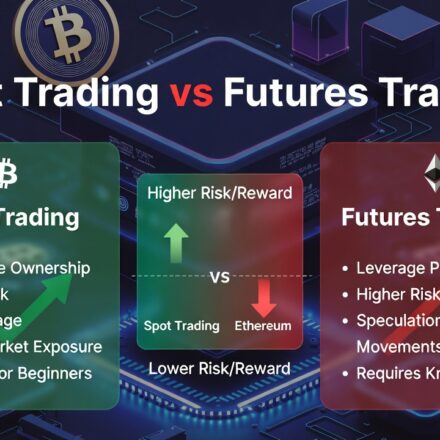
8.2 Isolated vs Cross Margin – Which One Should You Use?
| Type | How It Works | Pros | Cons | Best For |
|---|---|---|---|---|
| Isolated | Only the allocated margin for that position is at risk | One bad trade doesn’t affect others | Lower effective leverage per trade | Beginners, multiple positions |
| Cross | All account balance is shared margin across positions | Higher leverage possible, avoids early liquidation | One bad trade can liquidate everything | Advanced traders with hedging |
Rule for 2026: Beginners **always** start with isolated margin. Cross margin is for experienced traders with strict hedging and portfolio-level risk management.
8.3 Liquidation Price Calculation – Never Guess Again
Liquidation happens when your margin falls below the maintenance margin requirement.
Basic formula (isolated margin):
Liquidation Price (Long) = Entry Price × (1 – (Initial Margin Rate – Maintenance Margin Rate))
Liquidation Price (Short) = Entry Price × (1 + (Initial Margin Rate – Maintenance Margin Rate))
Example (10× leverage, 10% initial margin, 5% maintenance margin):
- Long BTC at $100,000
- Liquidation price ≈ $95,000 (5% below entry)
- Short BTC at $100,000
- Liquidation price ≈ $105,000 (5% above entry)
Always calculate liquidation price before opening any leveraged position — most exchanges show it automatically.
8.4 Safe Leverage Levels by Experience Level (2026)
| Experience Level | Max Leverage | Risk per Trade | Typical Position Size | Survival Rate |
|---|---|---|---|---|
| Beginner (0–6 months) | 1×–3× | 0.5–1% | Very small | High |
| Intermediate (6–18 months) | 3×–8× | 0.5–1% | Moderate | Medium–High |
| Advanced (18+ months, profitable) | 8×–20× | 0.5–1.5% | Larger, hedged | High (with discipline) |
Rule: If you’ve had a liquidation in the last 6 months, drop back to 3× max until 3 months liquidation-free.
8.5 Stop-Loss Placement for Leveraged Trades
Leveraged stops must be tighter but still respect structure.
- Below/above key swing low/high (not arbitrary %)
- Beyond obvious liquidity (below equal lows, above equal highs)
- Use ATR multiplier: 1–1.5× ATR below support for longs
- Never move stop further away after entry — only trail it closer
8.6 Funding Rate Traps & How to Use Them
Funding rates show who is paying whom:
- Positive rate (>0) → longs pay shorts → market is overcrowded long
- Negative rate (<0) → shorts pay longs → overcrowded short
Extreme funding (>0.1% per 8 hours) often precedes reversal. In 2026, watch for funding flips during ETF news events.
8.7 2026-Specific Leverage Risks
- ETF rebalancing spikes → sudden 5–10% moves → easy liquidation
- Higher leverage caps on some exchanges → check limits daily
- Increased bot activity → tighter stop hunts
- Cross-exchange arbitrage → funding rate differences create traps
8.8 Daily Leverage Checklist (Before Any Trade)
- Calculate liquidation price
- Confirm isolated margin mode
- Ensure risk ≤1% of account
- Check current funding rate
- Verify stop-loss respects structure + volatility
- State check: mood/energy >7/10?
8.9 30-Day Leverage Safety Bootcamp
Week 1: Spot trading only
Week 2: 1×–2× leverage, isolated, max 0.5% risk
Week 3: 2×–5×, add funding rate check
Week 4: Live trades + full checklist + journal every liquidation risk
Start Free Course – Learn Leverage Safely
Frequently Asked Questions
1. How long does it take to become consistently profitable trading cryptocurrency?
Realistically, 12–24 months of deliberate practice across at least one full bull and bear cycle. The first 3–6 months are usually spent learning basics and losing money while mastering risk management and psychology.
2. What is the single most important skill in crypto trading?
Risk management. You can be right 60–70% of the time and still lose everything without strict position sizing, stop-loss discipline, and drawdown limits.
3. Can beginners succeed at leverage trading without getting liquidated?
Yes, but only with 1×–3× leverage maximum, isolated margin mode, hard stop-losses, and never risking more than 1% of capital per trade. Anything above 5× is gambling for beginners.
4. How do I know if a breakout is real or a fakeout?
Real breakouts usually have strong momentum candle, volume spike, close well above resistance, and follow-through. Fakeouts show weak closes, long wick rejection, low volume, or immediate reversal. Wait for retest confirmation whenever possible.
5. Is on-chain analysis better than technical analysis?
No — the strongest edge comes from combining both. Technical analysis shows price structure and momentum; on-chain shows underlying supply/demand reality.
6. What is the best risk-to-reward ratio for beginners?
Minimum 1:2 (risk $1 to make $2). Aim for 1:3 or higher on high-probability setups. Even with a 45% win rate, 1:3 R:R keeps you profitable long-term.
7. How much leverage should a beginner use in crypto futures trading?
Start with 1×–3× max. Use isolated margin mode only. Anything above 5× dramatically increases liquidation risk even on small moves.
8. Why do most traders lose money even when they have good setups?
Emotional leaks override logic: FOMO buying tops, revenge trading after losses, overtrading during boredom, holding losers hoping for recovery, and poor risk sizing.
9. How do I spot a market top or bottom before the crowd?
Look for confluence: bearish/bullish divergence on momentum, extreme Fear & Greed readings (>80 or <20), volume climax + exhaustion, exchange inflow/outflow spikes, whale distribution/accumulation, and structure breaks (BOS + CHoCH).
10. What is the best way to trade pullbacks in an uptrend?
Wait for price to retrace to key levels (Fib 0.382–0.618, 50/200 EMA, trendline), look for bullish reversal candle + volume increase, enter on close above recent high, place stop below swing low, target previous high or 1:3+ R:R. Avoid deep retracements (>62%) unless reversal is confirmed.
11. Should beginners avoid leverage trading completely?
Not completely — but start with spot trading until you have 6–12 months of consistent profitability and strict risk discipline. When you do use leverage, keep it ≤3×, use isolated margin, and never risk >1% per trade.
12. How do I stop revenge trading and emotional decisions?
Implement hard rules: 24-hour no-trade rule after any loss >1%, daily trade limit (max 2–3 high-probability setups), pre-session mood/energy check (below 6/10 = no trading), automated stop-losses (no mental stops), and mandatory journaling after every trade. Over time, process becomes automatic and emotion fades.