

One of the most frequent questions new crypto traders ask is:
Should I start with spot trading or jump straight into futures?
The answer matters — a lot. Many beginners get lured by stories of massive gains from leveraged futures, only to lose their entire deposit due to liquidation during volatile market swings. Understanding the core differences between spot and futures trading is essential before putting real money at risk.
This updated 2026 guide breaks everything down clearly, with real-world examples, risks, and practical advice so you can make an informed decision.
If you’re completely new to crypto trading, begin here:
What Is Spot Trading?
Spot trading is the simplest and most straightforward way to trade cryptocurrency. When you buy on the spot market, you purchase the actual asset at the current market price — and you own it immediately.
Real Example (2026):
- You buy 0.1 BTC when Bitcoin is trading at $95,000.
- You now own 0.1 Bitcoin in your wallet or on the exchange.
- If BTC rises to $110,000, your position is worth $11,000 (profit of $1,500).
- If it drops to $80,000, you lose value — but only the paper loss until you sell.
There is no built-in leverage (unless you manually borrow funds via margin, which is rare for pure spot). Your risk is limited to the amount you invest.
Advantages of Spot Trading
- Lowest risk profile — no liquidation or margin calls.
- You truly own the asset (great for long-term holding, staking, or transferring to cold storage).
- Beginner-friendly with less emotional stress.
- No funding fees or expiry dates.
- Ideal for HODLing through bull markets.
Disadvantages
- Capital growth is slower (no leverage to amplify gains).
- Hard to profit from falling prices without advanced strategies (e.g., selling short manually or using options).
- Opportunity cost if the market moves fast and you’re fully invested.
What Is Futures Trading in Crypto?
Futures trading lets you speculate on the future price of a cryptocurrency without ever owning it. You trade contracts that track the asset’s price.
In crypto, the vast majority are perpetual futures (perps) — contracts with no expiration date. They use a funding rate mechanism (paid every 8 hours) to keep the futures price close to the spot price.
The biggest feature: leverage. You can control a large position with a small amount of capital.
Real Example (2026):
- You deposit $1,000 USDT.
- You open a 20x leveraged long position on BTC/USDT perpetual futures.
- You control a $20,000 position.
- If BTC rises 5% ($95,000 → $99,750), your profit is ~$1,000 (100% return on your margin — before fees).
- If BTC drops 5%, you lose ~$1,000 — wiping out your entire margin unless you add more funds.
Leverage on major exchanges (Binance, Bybit, MEXC, etc.) often ranges from 10x–125x for BTC/ETH, with some altcoins allowing up to 200x+ in 2026 — but higher leverage = exponentially higher risk.
Advantages of Futures Trading
- Potential for much higher returns (especially in short timeframes).
- Easy short selling — profit when prices fall.
- Capital efficiency — control large positions with little money.
- Hedge existing spot holdings (e.g., short futures to protect against crashes).
- 24/7 trading with perpetual contracts (no expiry rollover hassle).
Disadvantages
- Extremely high risk — small price moves can liquidate you.
- Funding rates can eat into profits (longs pay shorts in bull markets, and vice versa).
- High emotional pressure and potential for total account loss.
- Trading fees + funding fees add up quickly.
- Not suitable for beginners without strong discipline.
What Is Liquidation (and Why It Destroys Beginners)?
Liquidation occurs when your losses approach or exceed your initial margin. The exchange automatically closes your position at market price to stop further debt.
Example: With 20x leverage, a ~5% move against you can trigger full liquidation. In volatile 2026 markets (flash crashes still happen), this occurs in seconds.
Many beginners lose everything because they over-leverage without stop-losses or proper position sizing.
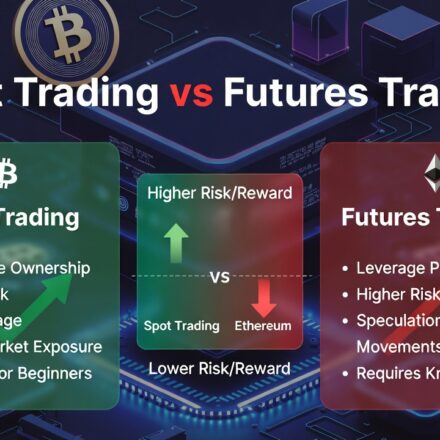
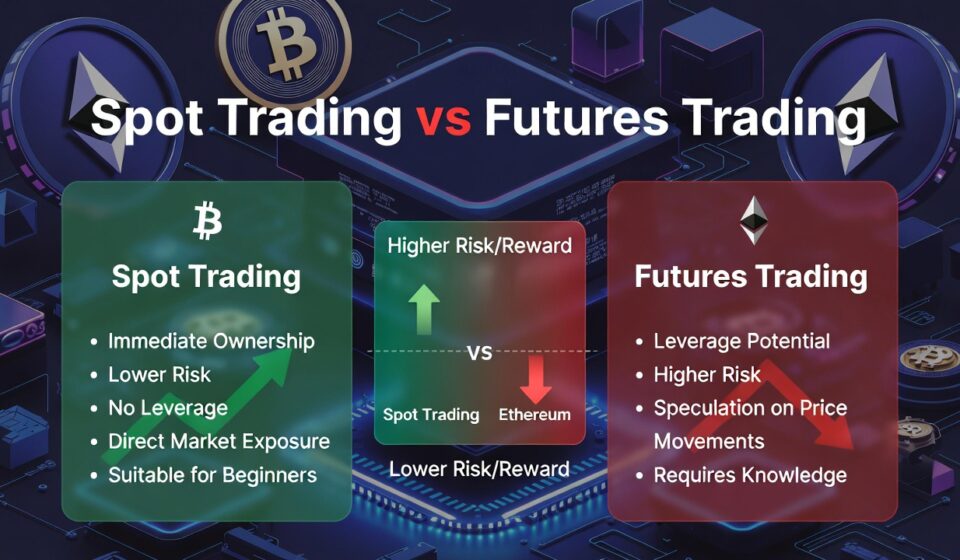
Spot vs Futures: Side-by-Side Comparison (2026)
| Feature | Spot Trading | Futures Trading (Perps) |
|---|---|---|
| Ownership | Yes — you own the actual crypto | No — you trade a price contract |
| Leverage | None (or manual margin only) | Yes (10x–200x+ common) |
| Liquidation Risk | No | Yes — very high with leverage |
| Short Selling | Limited / complicated | Easy and direct |
| Funding / Holding Fees | None | Yes (funding rate every 8 hours) |
| Best For | Beginners, long-term holders | Experienced traders, short-term speculation |
| Risk Level | Low to medium | Very high |
Which Should Beginners Choose in 2026?
Start with spot trading — full stop.
- Build real experience reading charts, managing risk, and controlling emotions without the threat of instant wipeouts.
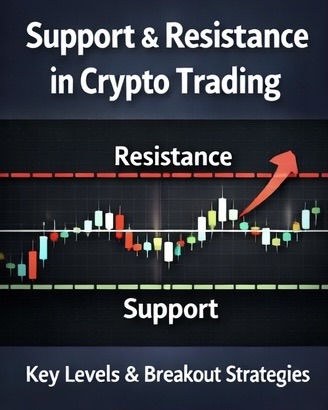
- Learn key concepts: support/resistance, trend lines, volume, and basic TA.
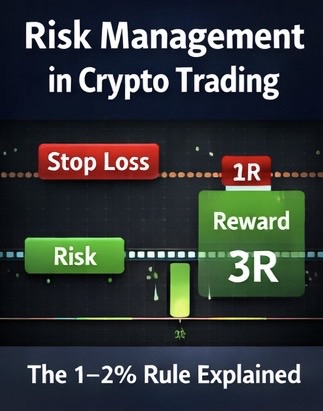
- Practice position sizing and never risk more than 1–2% per trade.
- Develop discipline before adding leverage.
Only move to futures after consistent spot profitability (e.g., 3–6 months).
Must-reads before touching leverage:
Advanced Insight: When Futures Actually Make Sense
Futures can be powerful — but only if:
- You have proven spot profitability over months.
- You strictly risk 1–2% of capital per trade (max).
- You use stop-losses religiously and understand funding rates.
- You have iron-clad emotional discipline (no revenge trading).
- You treat it as a business, not gambling.
Without these foundations, futures trading is statistically closer to high-stakes betting than investing.
Common Beginner Mistakes to Avoid
- Starting with 50x+ leverage “because it’s available.”
- Ignoring funding rates (they compound fast in one-sided markets).
- Trading without stop-losses during news events.
- Chasing pumps without a plan.
Final Thoughts
Spot trading builds your foundation and teaches survival in crypto markets. Futures trading amplifies both wins and losses — dramatically.
In 2026, with continued high volatility and leverage options, the golden rule remains: Choose based on your actual skill level — not market hype or FOMO.
Survival beats aggressive growth every time. Master spot first, then scale up responsibly.