

How to Become a Consistently Profitable Crypto Trader in 2026 – Full Playbook: Backtesting, Journaling, Position Sizing Mastery, Tax & Withdrawal Strategies, Portfolio Building & Cycle Survival

How to Become a Consistently Profitable Crypto Trader in 2026
Full Playbook: Backtesting, Journaling, Position Sizing, Tax, Portfolio & Cycle Survival
The cryptocurrency market has created some of the most life-changing financial opportunities of the past decade. Bitcoin rose from a few dollars to tens of thousands. Ethereum built an entire decentralized financial ecosystem. Thousands of traders entered the market hoping to capture similar gains.
However, the harsh reality is that most traders lose money. Studies across financial markets show that **80–90% of traders eventually fail**. Not because they lack intelligence, but because they lack a structured process.
This guide exists to solve that problem.
If you already read our beginner guide, you know the basics of charts, support and resistance, trend analysis, and risk management. If you haven’t yet, you should start with our foundational guide:
Complete Beginner’s Guide to Crypto Trading
This article is the next step. Instead of teaching you how to place trades, it teaches you how to build a professional trading system capable of producing consistent profits over time.
Table of Contents
- 1. The Professional Trader Mindset
- 2. Why Most Crypto Traders Fail
- 3. Developing Trading Discipline
- 4. The Daily Routine of Profitable Traders
- 5. The Risk Management Foundation
1. The Professional Trader Mindset
The biggest difference between profitable traders and struggling traders is not strategy. It is mindset.
Beginners approach trading emotionally. Professionals approach trading statistically.
When beginners lose a trade, they believe they made a mistake. When professionals lose a trade, they recognize it as part of probability.
Trading Is a Probability Game
Every trading strategy operates on probability. Even the best strategies rarely exceed a 60% win rate. That means losing trades are unavoidable.
Imagine flipping a coin that lands on heads 55% of the time. If you flip it 10 times, you may still lose 6 times. But if you flip it 1,000 times, the probability eventually plays out.
Trading works exactly the same way.
One trade does not matter. One hundred trades do.
The Shift from Outcome Thinking to Process Thinking
Unprofitable traders focus on results.
- Did this trade win?
- Did I make money today?
- Did I miss a big move?
Profitable traders focus on process.
- Did I follow my trading plan?
- Did I manage risk properly?
- Did I execute my setup correctly?
This shift is critical because results are unpredictable, but process is controllable.
Emotional Control in Crypto Trading
The cryptocurrency market is extremely volatile. Prices can move 10% in minutes. Social media constantly spreads hype and fear.
Without emotional discipline, traders easily fall into common traps:
- FOMO buying during rallies
- Panic selling during dips
- Revenge trading after losses
- Overtrading during sideways markets
Professional traders build systems that protect them from these behaviors.
Think Like a Risk Manager
Successful traders do not think primarily about profit. They think about risk.
Before entering a trade, professionals ask:
- How much can I lose?
- Is the reward worth the risk?
- Does this trade fit my plan?
Profit becomes a natural result of managing risk effectively.
2. Why Most Crypto Traders Fail
Understanding why traders fail can help you avoid the same mistakes.
Mistake 1: Trading Without a Plan
Many traders open charts and simply guess where price might go. Without predefined rules, decisions become emotional.
A professional trading plan defines:
- Entry conditions
- Stop loss placement
- Take profit targets
- Maximum risk per trade
- Maximum trades per day
Mistake 2: Using Too Much Leverage
Leverage amplifies both profits and losses. Beginners often use extremely high leverage hoping to become rich quickly.
Unfortunately, this usually leads to liquidation.
Professional traders typically use moderate leverage or none at all.
Mistake 3: Following Social Media Signals
Crypto Twitter and Telegram groups constantly promote trade ideas.
However, blindly copying signals prevents traders from developing independent skills.
Education is far more valuable than signals.
If you want to build those skills, explore our free training:
Mistake 4: Overtrading
Beginners believe they must trade constantly to make money.
Professionals understand that the best opportunities appear only occasionally.
Sometimes the most profitable decision is simply to wait.
3. Developing Trading Discipline
Discipline is the foundation of consistent profitability.
Without discipline, even the best strategy fails.
Rule-Based Trading
Every professional trader operates with strict rules.
- Only trade predefined setups
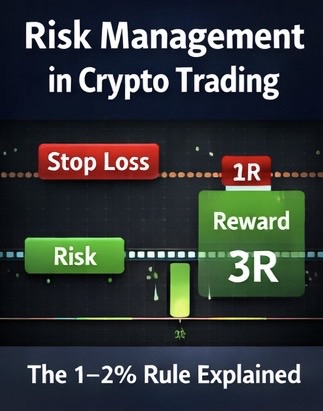
- Never risk more than 1–2% per trade
- Never move stop losses further away
- Take scheduled breaks after losses
These rules remove emotion from the decision-making process.
Creating Your Trading Plan
A strong trading plan includes:
- Markets you trade
- Timeframes you analyze
- Entry signals
- Risk rules
- Profit targets
- Review process
Your plan becomes the blueprint guiding every trade.
4. The Daily Routine of Profitable Traders
Consistency in trading begins with consistent routines.
Morning Market Analysis
Professional traders start by analyzing the market environment.
- Bitcoin trend direction
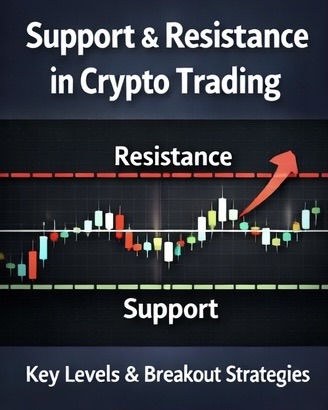
- Major support and resistance levels
- Macro news affecting crypto
- Market sentiment
You can track current market data here:
Identifying Trading Opportunities
After analyzing the market, traders identify potential setups.
However, they only execute trades that meet strict criteria.
End-of-Day Review
Professional traders review their performance daily.
This includes:
- Recording trades
- Analyzing mistakes
- Updating their journal
5. The Risk Management Foundation
Risk management determines long-term survival in trading.
The 1% Rule
Most professional traders risk **1% or less per trade**.
This means even a series of losses cannot destroy the account.
Risk Reward Ratio
A good trading system maintains a positive reward-to-risk ratio.
Example:
- Risk $100
- Target $300
Even with a 40% win rate, this system remains profitable.
Protecting Capital
Successful traders prioritize capital preservation.
As the famous trading rule states:
Rule #2: Never forget rule #1.
6. Backtesting Like a Professional Trader
Backtesting is one of the most important yet overlooked skills in trading. Many beginners jump directly into live trading without verifying whether their strategy actually works. Professional traders take the opposite approach: they test strategies extensively before risking real money.
Backtesting allows you to simulate trades on historical market data. By applying your trading rules to past price movements, you can measure how your strategy would have performed over time.
This process helps answer critical questions:
- Does my strategy actually produce profit?
- What is the average win rate?
- How large are typical losses?
- What drawdowns should I expect?
- Does the strategy work in different market conditions?
Without backtesting, traders rely on guesswork. With backtesting, trading becomes a data-driven process.
Manual Backtesting vs Automated Backtesting
There are two main approaches to backtesting:
| Method | Description | Best For |
|---|---|---|
| Manual Backtesting | Reviewing historical charts and simulating trades manually | Beginners learning price behavior |
| Automated Backtesting | Using scripts or software to test strategies automatically | Advanced traders scaling systems |
Most traders begin with manual backtesting using chart replay tools. This builds intuition about market structure.
Step-by-Step Backtesting Process
- Choose a market (BTC, ETH, or altcoins)
- Select a timeframe (1h, 4h, or daily)
- Define strict entry rules
- Define stop loss and take profit
- Replay historical data and simulate trades
- Record each trade in a spreadsheet
Ideally you should test at least 100–300 trades before trusting a strategy.
Common Backtesting Mistakes
Many traders perform backtests incorrectly. Avoid these common errors:
- Changing rules during testing
- Ignoring losing trades
- Testing only a few examples
- Testing only one market cycle
Proper backtesting requires consistency and objectivity.
If you’re new to trading strategies, review the fundamentals first:
7. Advanced Position Sizing and Money Management
Position sizing determines how much capital you allocate to each trade. Even profitable strategies can fail if position sizing is incorrect.
The purpose of position sizing is to control risk while maximizing long-term growth.
The Fixed Percentage Method
The most common professional method is the fixed percentage model.
Example:
- Account balance: $10,000
- Risk per trade: 1%
- Maximum loss per trade: $100
This approach ensures that losing streaks cannot destroy your account.
Position Size Formula
The position size formula looks like this:
Position Size = Account Risk / Stop Loss Distance
Example:
- Risk: $100
- Stop loss: $500 away
- Position size: 0.2 BTC
This ensures that if the stop loss is hit, the loss equals your predefined risk.
Scaling Into Winning Trades
Professional traders sometimes increase position size after the trade moves in their favor.
This technique is called pyramiding.
The concept is simple:
- Enter initial position
- Add additional positions as trade becomes profitable
- Protect downside with adjusted stop losses
This allows traders to maximize profits during strong trends.
Why Averaging Down Is Dangerous
Many beginners attempt to recover losing trades by adding more capital as the price falls.
This strategy is known as averaging down.
While it can sometimes work temporarily, it dramatically increases risk and often leads to catastrophic losses.
Professional traders follow the opposite rule:
8. Trading Journaling That Improves Performance
One of the fastest ways to improve as a trader is keeping a detailed trading journal.
A trading journal records every trade along with the reasoning behind it.
This process reveals patterns in both profitable and losing trades.
Information to Record in a Journal
- Date and time of trade
- Asset traded
- Entry price
- Stop loss
- Take profit
- Reason for entering trade
- Emotional state
- Final result
Over time, this data becomes extremely valuable.
Identifying Your Strengths
After reviewing dozens of trades, you will begin to notice patterns.
For example:
- Breakout trades perform best
- Range trades perform poorly
- Trades taken late at night lose more often
These insights allow you to refine your strategy.
Weekly Performance Reviews
Professional traders schedule weekly review sessions.
During these reviews they evaluate:
- Total trades taken
- Win rate
- Average reward-to-risk ratio
- Mistakes made
The goal is constant improvement.
Trading is a skill. Like any skill, improvement comes from deliberate practice and feedback.
Transition to Portfolio Strategy
So far we have focused on active trading techniques such as strategy testing, position sizing, and journaling. However, successful crypto investors also understand the importance of portfolio management.
Trading generates short-term opportunities, but long-term wealth often comes from holding strong assets during major market cycles.
In the next section of this guide we will explore:
- How to build a diversified crypto portfolio
- How to manage bull and bear markets
- How to protect profits during market downturns
- How professional traders scale accounts over time
You can also track real-time market data here:
9. Building a Long-Term Crypto Portfolio in 2026
While active trading generates short-term profits, long-term wealth in cryptocurrency is usually built through strategic portfolio management.
Professional traders rarely rely on trading alone. Instead, they combine:
- Active trading strategies
- Long-term holdings
- Strategic portfolio diversification
This approach allows traders to benefit from both short-term market volatility and long-term industry growth.
Core vs Satellite Portfolio Strategy
A common professional portfolio structure is the core–satellite model.
| Portfolio Section | Allocation | Purpose |
|---|---|---|
| Core Holdings | 60–80% | Long-term assets such as Bitcoin and Ethereum |
| Satellite Positions | 20–40% | Higher-risk altcoins or emerging sectors |
This structure provides both stability and growth potential.
Example Portfolio Allocation
- 40% Bitcoin
- 30% Ethereum
- 10% Layer-2 projects
- 10% AI-related crypto tokens
- 10% DeFi protocols
Portfolio allocations should be adjusted based on market cycles and risk tolerance.
If you’re new to portfolio building, start with our full beginner guide:
Complete Beginner’s Guide to Crypto Trading
10. Understanding Crypto Market Cycles
Cryptocurrency markets move in cycles. Traders who understand these cycles can position themselves ahead of major market shifts.
The typical crypto cycle consists of four phases:
- Accumulation
- Expansion
- Euphoria
- Bear market
Phase 1: Accumulation
This phase occurs after a major market crash. Prices stabilize and experienced investors slowly accumulate assets.
Market sentiment is usually negative during this stage, which creates opportunity for disciplined investors.
Phase 2: Expansion
During expansion phases, market confidence begins returning.
Institutional investment increases, trading volume rises, and prices begin trending upward.
Phase 3: Euphoria
The euphoria stage is characterized by rapid price growth and widespread media coverage.
Retail investors flood into the market during this period.
While profits can be enormous during this stage, risk also increases significantly.
Phase 4: Bear Market
Eventually the market overheats and a correction begins.
Prices fall sharply and many investors panic sell.
Experienced traders use this phase to secure profits and prepare for the next accumulation cycle.
You can track live market movements anytime here:
11. Crypto Taxes and Regulations in 2026
As cryptocurrency adoption grows, governments around the world are implementing clearer regulatory frameworks.
Traders should understand tax obligations to avoid legal problems.
How Crypto Taxes Typically Work
Most jurisdictions treat cryptocurrency as a capital asset. This means taxes are triggered when you:
- Sell cryptocurrency for fiat currency
- Trade one cryptocurrency for another
- Use crypto to purchase goods or services
The taxable amount is usually the difference between the purchase price and the selling price.
Example Tax Calculation
| Transaction | Value |
|---|---|
| Purchase price | $2,000 |
| Sale price | $3,500 |
| Taxable gain | $1,500 |
Maintaining accurate records is extremely important for compliance.
Tools for Tracking Crypto Taxes
- Koinly
- CoinTracker
- TokenTax
These platforms automatically import exchange transactions and generate tax reports.
12. Scaling Your Trading Account
After achieving consistent profitability, the next challenge is scaling capital safely.
Many traders destroy profitable systems by increasing risk too quickly.
The key is gradual growth.
Realistic Compounding Example
Assume a trader generates an average return of 5% per month.
| Starting Capital | After 12 Months |
|---|---|
| $5,000 | $8,980 |
| $10,000 | $17,960 |
| $25,000 | $44,900 |
While these numbers may seem modest, long-term compounding can produce substantial growth.
The primary objective is survival and consistency.
Professional Scaling Strategies
- Increase position size only after consistent results
- Withdraw partial profits regularly
- Maintain strict risk management
- Avoid lifestyle inflation
Final Thoughts
Becoming a consistently profitable crypto trader requires patience, discipline, and continuous learning.
Successful traders develop structured processes for:
- Strategy development
- Risk management
- Trade journaling
- Portfolio management
These processes transform trading from speculation into a professional skill.
If you want a step-by-step roadmap for mastering crypto trading, start here:
Frequently Asked Questions
How long does it take to become profitable in crypto trading?
Most traders require 12–24 months of practice before achieving consistent profitability.
Is crypto trading risky?
Yes. Cryptocurrency markets are volatile. Proper risk management is essential.
What is the best strategy for beginners?
Beginners should start with simple trend-following strategies and focus heavily on risk management.
Should beginners trade daily?
No. Beginners benefit from fewer, higher-quality trades rather than constant activity.
How much money do I need to start trading?
Many traders begin with $100–$1,000 to gain experience before scaling up.